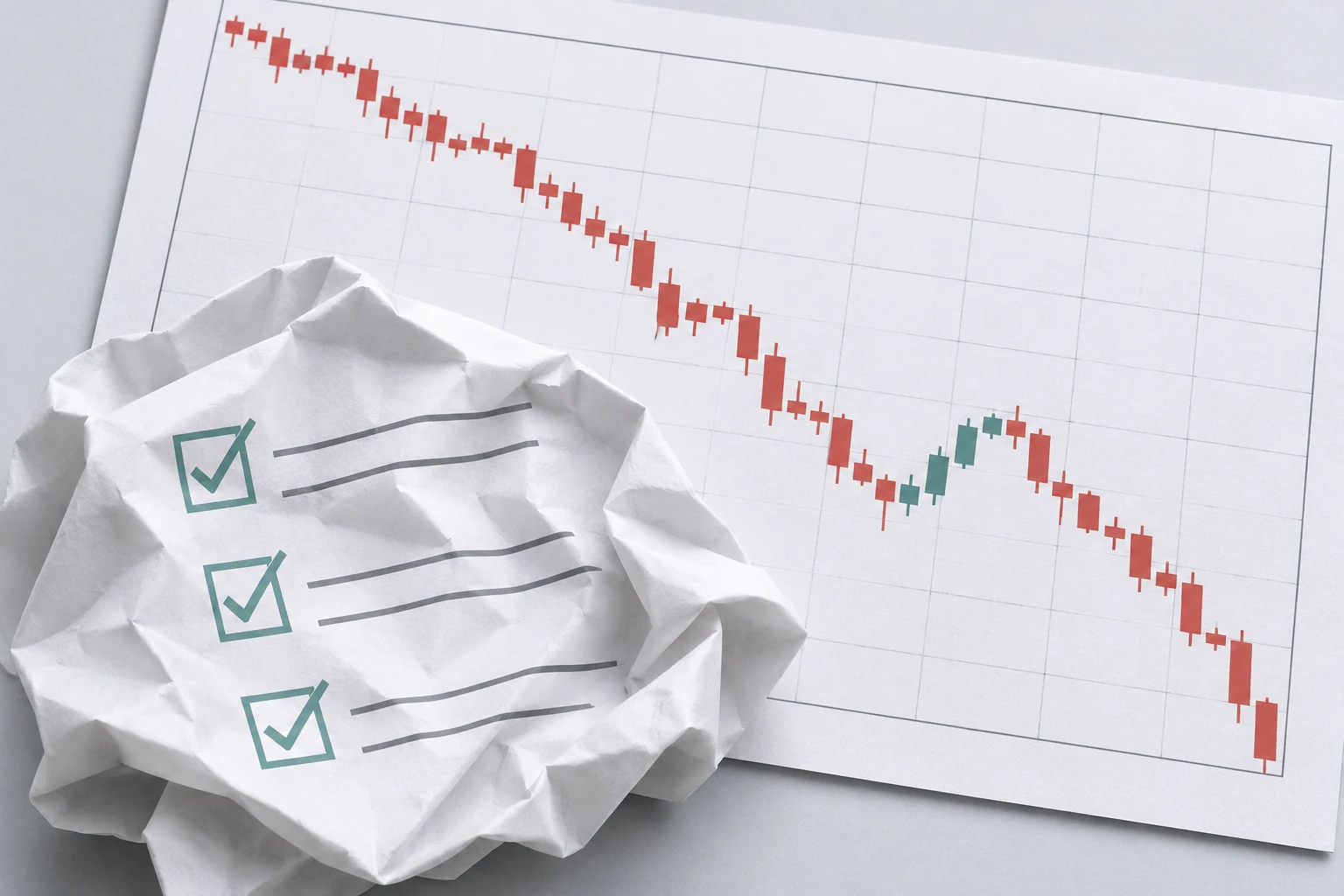
Markets have been bleeding for five weeks straight. Oil is above $100. Consumer sentiment just dropped below 2008 levels. The Houthis launched a ballistic missile at Israel, and now everyone is wondering if Bab al-Mandab is next. Your timeline is full of people panicking. Red screens everywhere. Should I sell everything? is trending.
Here is the thing nobody wants to hear: the crash is not what kills most portfolios. The reaction to it does.
The Real Damage Happens Between Your Ears
Think about your worst trade ever. Was it during a calm, boring Tuesday? Probably not. It was probably when something big happened, your heart rate went up, and you made a decision you would not normally make. That is not a coincidence. When fear kicks in, your prefrontal cortex, the part of your brain that does analysis and planning, basically goes offline. You start operating on instinct. Fight or flight. Sell everything or double down on something stupid.
This is why the same traders who spend weeks building a careful strategy will throw it all out the window the moment oil gaps up 8% overnight.
"Cheap" Does Not Mean "Buy"
Right now, tech stocks are trading at their lowest P/E premium to the S&P since 2019. Sounds like a deal, right? Maybe. But cheap in March can become cheaper in April. And cheaper still in May. Valuation has never been a reliable timing signal on its own. Especially not when there is a war escalating in the Middle East, oil supply routes are being threatened, and the Fed is stuck between inflation and recession.
The traders who bought "cheap" stocks in early 2022 waited almost two years to break even. Some still have not.
What Actually Works
The traders who come out of drawdowns in decent shape are not smarter than everyone else. They are not better at predicting geopolitics or reading oil charts. They just have rules. Written down, tested, and, this is the important part, actually followed when things get ugly.
- Position sizing rules
- Stop losses that are not just numbers on a screen but actual orders in the market
- Risk limits per day and per week that they do not override because "this time feels different"
It sounds boring. It is boring. That is the point. Trading should be boring when the world is on fire. If it is exciting, you are doing it wrong.
The Tools Exist Now
A few years ago, following a rules-based system meant either coding your own algo or paying thousands for institutional software. That is not the case anymore. MiDash brings research, available backtesting and supported Trading Agents into one workspace. A Trading Agent runs after you review and approve its deployment; manual orders require their own confirmation.
The question is not whether these tools exist. It is whether you will use them before the next headline hits, or after your portfolio already took the damage.
The Market Does Not Care About Your Feelings
Build a system that does not have any. Your rules. Your AI. Your edge.